

How To Outsmart Your Boss With Goethe Certificate
Understanding the Goethe Certificate: A Comprehensive Guide
The Goethe Certificate, acknowledged internationally, is an important credential for anyone striving to show their efficiency in the German language. Named after Johann Wolfgang von Goethe, this certificate serves not simply as a proof of language abilities but likewise as a gateway to scholastic, expert, and cultural opportunities in German-speaking countries. This blog post dives into the subtleties of the Goethe Certificate, its various levels, the evaluation procedure, advantages, and frequently asked concerns.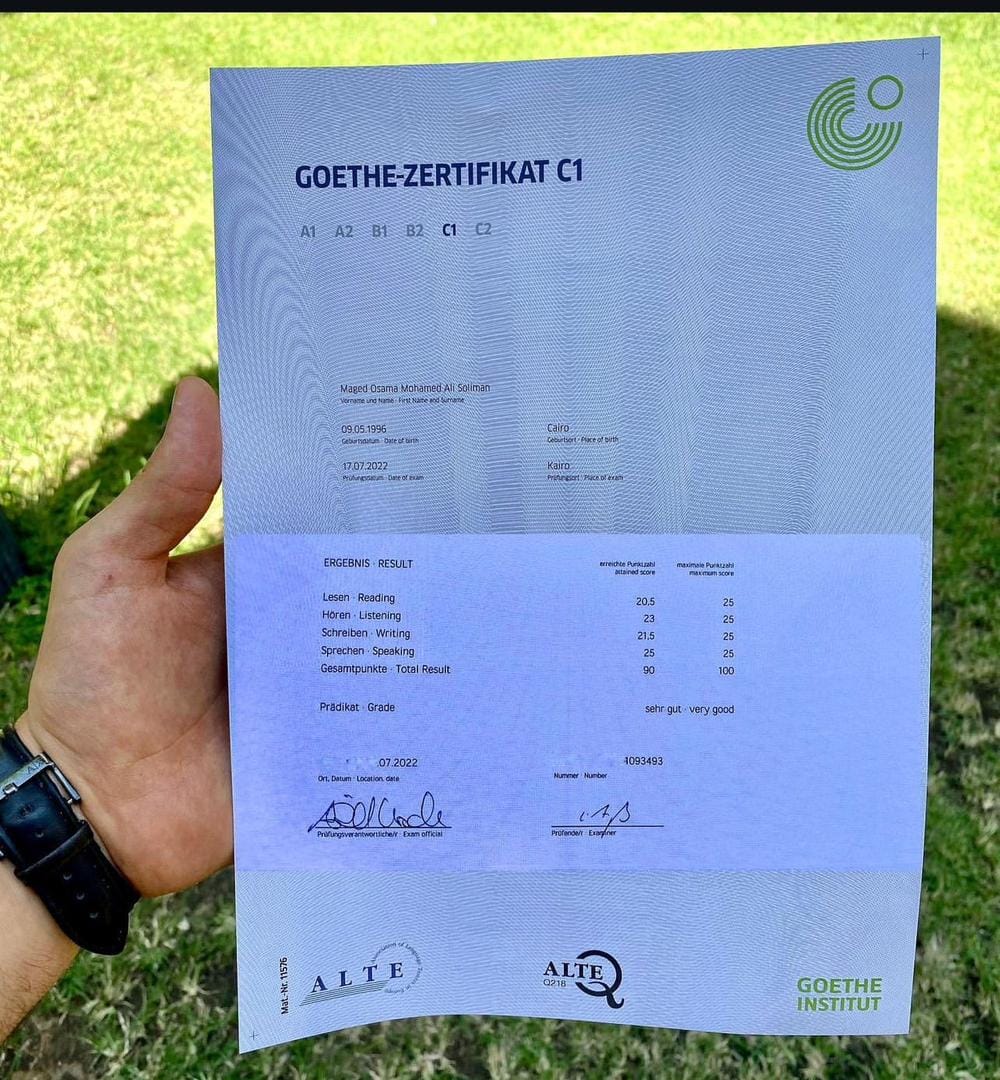
What is the Goethe Certificate?
The Goethe Certificate is administered by the Goethe-Institut, a non-profit German cultural association that promotes the study of the German language abroad and encourages worldwide cultural exchange. The certificate verifies a prospect’s efficiency across various levels of the Common European Framework of Reference for Languages (CEFR), which ranges from beginner to sophisticated stages.
Levels of the Goethe Certificate
The Goethe Certificate provides evaluations across 6 levels, categorized as follows:LevelCEFR EquivalentDescriptionA1A1Novice: Basic understanding and use of daily expressions.A2A2Elementary: Ability to communicate in basic, routine jobs.B1B1Intermediate: Ability to understand and produce easy linked text.B2B2Upper Intermediate: Ability to interact successfully in a range of contexts.C1C1Advanced: Competence in intricate texts and principles with ease.C2C2Competent: Mastery of the language, consisting of nuanced understanding.These levels supply a structured format for students to gauge their language abilities and set achievable goals for development.
Examination Process
Structure of the Exam
Each level of the Goethe Certificate exam includes a number of elements created to evaluate different aspects of language efficiency. The structure is generally as follows:
- Listening Comprehension: Candidates listen to audio recordings and address concerns to show their understanding of spoken German.
- Reading Comprehension: Written texts are evaluated, and comprehension is evaluated through concerns.
- Writing: Candidates compose essays or total tasks that require them to reveal their thoughts coherently in written German.
- Speaking: This element examines the prospect’s capability to take part in a discussion, reveal opinions, and discuss various topics.
Registration and Preparation
To register for an exam, prospects should find a regional Goethe-Institut or authorized screening center. Preparation can take various kinds, such as self-study, class courses, or online resources. Practicing with main Goethe materials is highly suggested, as it familiarizes candidates with the exam’s format and requirements.
Advantages of Holding a Goethe Certificate
- Global Recognition: The goethe C1 Zertifikat Certificate is acknowledged worldwide, enhancing a prospect’s resume for job applications or academic admissions.
- Academic Opportunities: Many German universities need evidence of German proficiency, often satisfied by the Goethe Certificate.
- Cultural Exchange: The certificate promotes engagement in cultural and social activities in German-speaking areas.
- Personal Growth: Achieving proficiency can enhance one’s understanding of the German culture, literature, and viewpoint.
- Profession Advancement: Bilingual specialists are highly looked for after in the international task market, particularly in sectors like tourist, global business, and education.
Extra Resources for Preparation
- Goethe-Institut Courses: Various courses customized to particular levels and needs.
- Online Platforms: Websites such as Duolingo or Babbel use language courses and practice exercises.
- Research study Groups: Joining or forming study hall can offer motivation and peer support.
- Authorities Practice Tests: These are available on the Goethe-Institut’s website to familiarize candidates with the exam structure.
Regularly Asked Questions (FAQ)
1. What is the credibility duration of the Goethe Certificate?
The Goethe Certificate does not have an expiration date; nevertheless, some organizations may require a renewa-l assessment after several years, particularly if the candidate has actually not used their language abilities.
2. Can I retake the exam if I do not pass?
Yes, candidates can retake the exam as lot of times as needed. It’s advisable to prepare completely before attempting to retake.
3. The length of time does it take to get ready for the Goethe exam?
Preparation time varies based on the person’s starting level. Normally, it varies from a couple of months for the A1 level to a year or more for greater levels, depending on the commitment and resources used.
4. How can I find the nearest Goethe-Institut?
The Goethe-Institut has a detailed site where you can locate the closest center based upon your geographical location. Simply visit their website and utilize the search function to discover an appropriate location.
5. What materials are recommended for exam preparation?
The Goethe Institute provides practice materials, trainee books, apps, and online resources that are specifically created for each level, which can be profoundly practical in getting ready for the exam.The Goethe Certificate stands as a testament to one’s devotion and proficiency of the German language. It opens doors to various academic and expert chances while improving one’s understanding of a lively culture. Whether you’re wanting to advance your career, research study at a German university, or simply delight in the charm of the language, getting ready for and acquiring the Goethe Certificate is a worthwhile pursuit. With the right preparation, devotion, and resources, attaining efficiency in German with the Goethe Certificate is a goal within reach.
请登录或注册以提交给你的回答


